
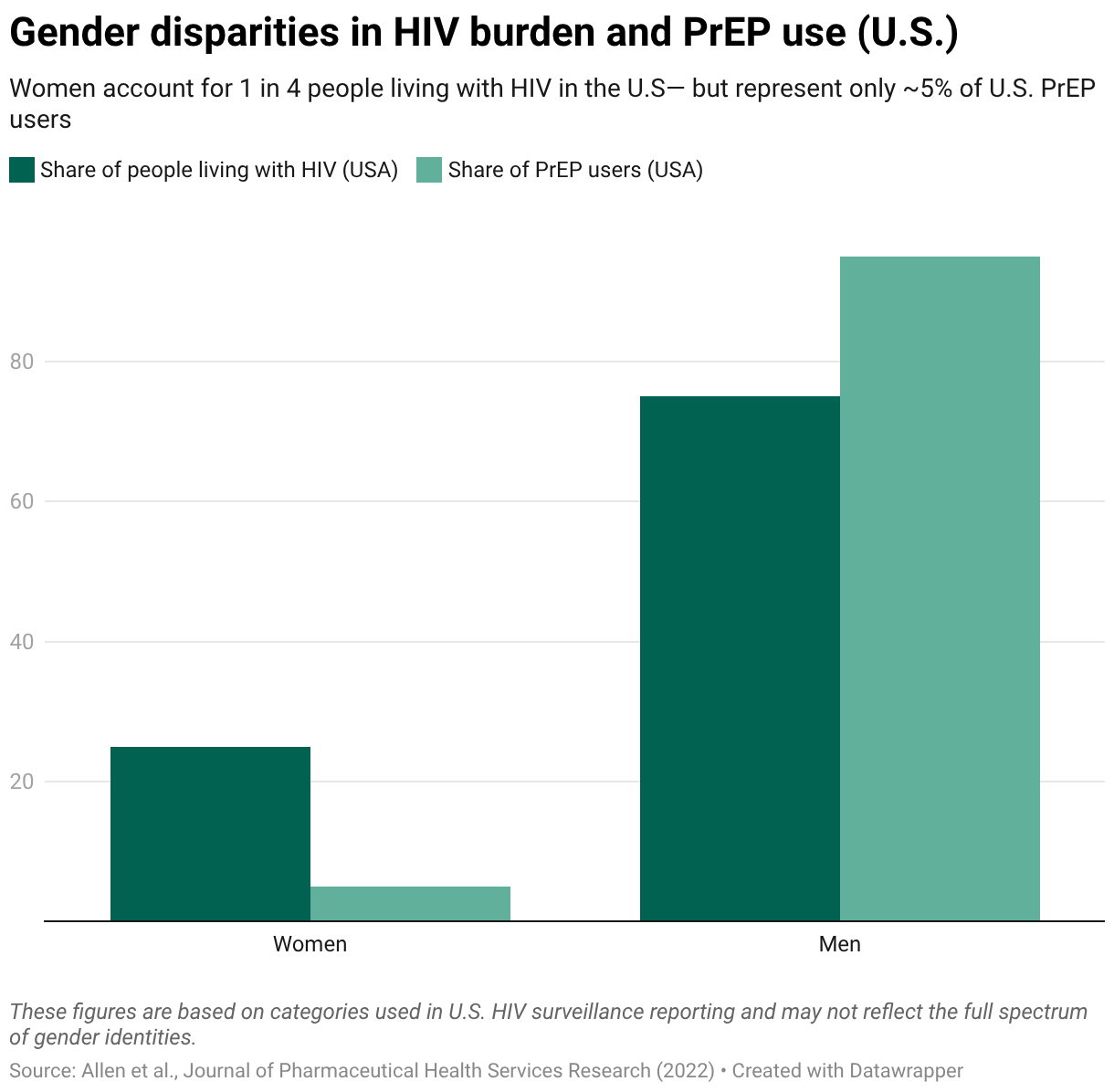
If you’ve been looking into HIV prevention, you may have noticed that much of the information around PrEP focuses on gay men, leaving people with vaginal exposure feeling overlooked or unsure if it applies to them.
But PrEP isn’t limited by identity — it’s an effective HIV prevention option for cis women, trans women (including those with neovaginal tissue, where specific research is still emerging but PrEP remains recommended), trans men, and non-binary people assigned female at birth (AFAB).
Understanding how protection works for vaginal exposure is key. We’ll cover how effectiveness differs, how PrEP interacts with birth control and fertility, and what consistent use actually looks like in everyday life — so you can make an informed, confident decision about your PrEP options.
Why many women don’t realize PrEP is for them
One of the biggest reasons people with vaginas don't get on PrEP can be "gatekeeping" from traditional healthcare. You might visit a family doctor only to find they don't think you "need" it, ask you judgmental questions, or simply aren't up to date on current guidelines.
When that happens, it can feel like you’re asking for something unreasonable. You’re not.
Let’s clear up a few myths that tend to get in the way:
- PrEP is only for gay men: HIV doesn't care about identity. If you have vaginal sex and want protection, PrEP is an option.
- I have to be "high-risk" to qualify: Preventive care isn’t for worst-case scenarios. Wanting peace of mind is enough.
- It'll mess with my hormones: Whether it's birth control or gender-affirming hormone therapy (GAHT), PrEP does not interfere with your hormone levels.
- I can’t take it if I want to get pregnant: PrEP is actually recommended for safely conceiving and maintaining a healthy pregnancy when one partner's status is positive or unknown.
If you’ve ever felt like you had to convince a clinician to take your prevention goals seriously, that experience is real. Healthcare hasn’t always centered people with vaginal exposure in HIV prevention conversations.
But working with a specialized PrEP care team is different. The conversation doesn’t start with whether you “really need” protection. It starts with understanding your exposure, your relationships, and what peace of mind looks like for you.
What PrEP is (and what it protects against)
Before we talk about options, it helps to be clear on what PrEP actually does and what it doesn’t.
- HIV protection only: PrEP is highly effective at preventing HIV, but that’s its only job. It won't protect you from other STIs like chlamydia, gonorrhea, or syphilis, and it isn't birth control. So, if you need coverage for those, you’ll need to layer in other methods.
- Proactive, not reactive: Unlike PEP (Post-Exposure Prophylaxis), which is emergency medication used after a potential exposure, PrEP is designed to be in your system before an exposure happens.
- Continuous care: This isn't a one-and-done prescription. Being on PrEP means regular HIV testing and routine labs to make sure it’s working well and your body is responding safely.
Does PrEP work for people with vaginal exposure?
Yes — PrEP is highly effective for people with vaginal exposure. When taken as prescribed, daily PrEP is up to 99% effective at preventing HIV. For people assigned female at birth (AFAB), protection builds a little differently in vaginal tissues than it does elsewhere in the body.
Here’s what that means in practical terms:
- The 21-Day Rule: Think of PrEP like building up a shield. While it only takes about a week for other types of sex, it takes 21 days of daily use for the medicine to fully saturate vaginal tissue. You just have to give it that head start to get where it needs to go.
- Daily use is the only way: You might’ve heard of "on-demand" PrEP (the 2-1-1 method), where you only take pills around the time you’re having sex. That approach isn’t recommended for vaginal exposure. Drug levels in vaginal tissue don’t stay high enough for reliable protection, so daily use is what keeps protection consistent.
- The Descovy exception: Descovy is not currently FDA-approved for HIV prevention in people with vaginal exposure, largely because early studies included limited data in this population. However, newer studies now demonstrate efficacy in people assigned female at birth (AFAB), and some clinicians prescribe it off-label based on current evidence and individual clinical circumstances. Because this use is off-label, insurance coverage may vary.
Who PrEP is for (hint: it’s about you, not a category)
There’s no "eligibility policing" here. If you want to be protected, that’s usually enough of a reason to talk to a clinician. PrEP is about being proactive about planning ahead, not just reacting when something feels "risky."
It’s a particularly great fit for anyone who is:
- Navigating new partners or unknown status: Whether you’re re-entering the dating scene or have a new partner, you might not have a full picture of their sexual health yet. PrEP puts the power of protection in your hands while you're building trust and getting those first conversations out of the way.
- Experiencing inconsistent condom use: Maybe it’s a personal preference or maybe things just don’t always go according to plan. Either way, PrEP acts like a "silent partner" for your safety.
- Managing a recent STI: HIV risk increases when an STI is present, since inflammation or small sores can make it easier for the virus to enter the body. Because STIs aren’t always preventable, PrEP provides an extra layer of protection in case your risk changes. Decisions about stopping PrEP should be made with clinical guidance and counselling, taking into account your most recent exposure and ongoing risk.
- Looking for personal peace of mind: Sometimes you just want to know you’re covered so you can stop worrying. That’s a completely valid reason to choose PrEP too.
PrEP, pregnancy, and birth control
If pregnancy or birth control is part of your life right now, here’s how PrEP fits in.
- PrEP and birth control work side by side: A big concern for many is if PrEP will "cancel out" their contraception. It won’t. PrEP does not interfere with hormonal birth control — that includes the pill, IUD, implant, patch, or ring. Both medications do their own job without getting in each other’s way.
- PrEP can be used during pregnancy and breastfeeding: Pregnancy can actually increase your biological vulnerability to HIV, so staying on PrEP provides a necessary layer of protection for both you and the baby.
- It doesn’t affect future fertility: PrEP won’t change your ability to get pregnant (now or in the future) and there is nothing to "clear out" or taper off when you decide you're ready to conceive.
- Why clinical guidance is the standard: Decisions around pregnancy and PrEP should always involve your provider. They’ll monitor kidney function and STI screenings to make sure PrEP is working well and your overall health stays on track.
Safety, side effects, and long-term health
Most people take PrEP with zero issues. If you do notice a little nausea or a mild headache when you first start, don’t panic. These temporary “start-up” symptoms usually improve within 2–3 weeks as your body adjusts to the medication.
- Managing early side effects: If you deal with some stomach upset or fatigue in those first few days, try taking your pill with a meal or right before bed. These effects are almost always temporary and clear up once your body adjusts.
- Monitoring kidney health: Oral PrEP is processed through your kidneys, so your clinician will routinely check a value called "creatinine" to make sure your kidneys are handling the meds well.
- Keeping an eye on bone health: For a small number of people, oral PrEP can cause a very slight decrease in bone mineral density. This change is typically small and generally reversible if you ever stop the medication.
- Lab timing depends on your PrEP: While regular labs are the standard, the schedule changes based on what you’re taking.
- Daily pills (like Truvada): Expect labs about every 3 months. That usually includes an HIV test and a kidney check to make sure everything’s working safely.
- Every-other-month injections (like Apretude): HIV testing is required before each injection (every 2 months). Other routine PrEP monitoring labs are typically done every other injection (about every 4 months).
- Twice-yearly injections (like Lenacapavir): HIV testing is done before each injection, so about every 6 months. STI screening is typically recommended every 3–6 months, depending on exposure and local guidance.
What getting PrEP actually looks like
Getting on PrEP with a telehealth option like Freddie is a straightforward process designed to be discreet and fit your life. Here’s how the process works:
- The consult: You’ll start with a quick virtual or in-person chat with a clinician, with no consultation fee. This is a judgment-free space to ask questions about things like birth control, fertility, or what to do if you miss a dose.
- The labs: Before starting, your clinician will complete testing to confirm you are HIV-negative and ensure PrEP is safe and appropriate for you. This typically includes kidney function testing, screening for hepatitis A, B, and C (including immunity status for hepatitis A and B), and testing for common sexually transmitted infections such as chlamydia, gonorrhea, and syphilis. For patients who can become pregnant, pregnancy testing is also done at baseline and routinely during follow-up. Depending on your location, you may be able to use a discreet at-home kit or visit a local lab to complete testing privately.
- Delivery & pick-up: You can have your meds delivered in plain, unbranded packaging or sent to your local pharmacy for same-day pickup.
- The routine: PrEP is an ongoing care model. Every few months, you’ll do a quick health check and new labs to keep you on top of your sexual health and ensure the medication is doing its job.
Cost, insurance, and paying $0
We know the "sticker price" of specialty meds can be intimidating, but over 90% of Freddie patients pay $0 for their medication. We treat financial navigation as a standard part of our care, not a hurdle you have to clear alone.
Here are the programs that help offset the cost:
- The ACA mandate: Most private insurance plans are required to cover PrEP, including the medication, labs, and visits, with $0 out of pocket.
- Financial assistance: High copay or no insurance? Manufacturer co-pay cards and federal programs can often bring your total cost down to $0.
Whether it’s through your employer’s plan, a marketplace plan, or a patient assistance program, the goal stays the same: get your cost as close to zero as possible.
Note for Canadian readers: PrEP is publicly funded in several provinces, including BC, Alberta, Saskatchewan, and Ontario, for eligible individuals. Coverage details vary by province. In regions where public coverage isn’t available or eligibility criteria aren’t met, Freddie helps patients navigate private insurance and assistance programs to reduce out-of-pocket costs.
Getting PrEP without a primary care doctor
You don't need a family doctor to get PrEP. In fact, many people prefer not to use their regular doctor if they aren’t familiar with PrEP protocols or simply because they want more privacy.
Virtual care lets you connect with clinicians who focus on sexual health, right from your phone. You can handle your consult, lab interpretation, and refills without ever stepping into a waiting room or needing to justify your identity to a doctor who may not be familiar with PrEP for your body. Here's what the process looks like.
Take our 1-minute assessment to get PrEP with Freddie!
The consult: a conversation, not a commitment
Think of a Freddie consult as a focused, practical conversation about your health. The clinician’s role isn’t to quiz you. It’s to help you sort through what protection looks like in your real life.
During a consult, you can expect:
- A judgment-free zone: We talk about sex, relationships, and prevention goals openly. One partner or several, long-term or casual, you’ll be met with respect.
- Lab work decoded: If your results are available during your consult, your clinician will review them with you and answer any questions. Otherwise, normal results are typically communicated without requiring another visit, and follow-up is arranged if anything needs attention. Processes may vary slightly between the U.S. and Canada.
- Your personal roadmap: In 2026, protection can mean a daily pill or long-acting injections. The focus is on finding the option that fits your real-life routine.
- Care that connects: PrEP is discussed alongside contraception, gender-affirming therapy, or future pregnancy plans — so everything works together.
Still have questions about PrEP, pregnancy, or coverage? We can walk through it with you.
Frequently asked questions about PrEP for women
Does PrEP work for vaginal sex?
Yes. When taken daily as prescribed, PrEP is highly effective at preventing HIV from vaginal sex. One important detail: not every version is approved for vaginal protection.
Descovy hasn’t been approved for receptive vaginal sex because it wasn’t studied in that population during clinical trials. However, a recent study has demonstrated the efficacy of Descovy in people assigned female at birth (AFAB), and some clinicians may consider its use based on current evidence and individual clinical circumstances.
If vaginal exposure is part of your life, the recommended options are the daily oral pill (like generic Truvada) or the long-acting injectable. A clinician can help you choose the one that fits your routine best.
Can I take PrEP if I’m pregnant or trying to get pregnant?
Absolutely. Clinical guidelines fully support using PrEP during conception and pregnancy. It’s a safe, effective way to keep both you and the baby protected from HIV.
Does PrEP affect birth control?
No, PrEP doesn’t interfere with hormonal birth control like the pill, patch, IUD, or implant. You can stay on both without worrying about either one losing its effectiveness.
How long does PrEP take to start working for people with vaginal exposure?
It takes 21 days of daily use to reach maximum protection in vaginal tissue. This is a longer "lead-in" time than anal sex (which only takes 7 days), so make sure you use backup protection like condoms during those first three weeks.
How often do you need labs on PrEP?
It depends on which version of PrEP you’re using, since the lab schedule is tied directly to how you get your meds:
- Daily Pills: You’ll need labs every 3 months. This includes an HIV test and a check on your kidney function to make sure your body is handling the medication safely.
- Apretude (Every 2 months): Labs are required every 2 months, usually done right at the same time as the injection.
- Yeztugo (Every 6 months): Lab work is timed to those clinic visits every 6 months.
Along with HIV and kidney checks, clinicians typically screen for STIs every 3 to 6 months to keep your full sexual health on track.
Can I get PrEP without a family doctor?
Absolutely. You don't need a GP or a referral to start. Virtual clinics and sexual health specialists let you access PrEP care discreetly and independently, usually without ever having to set foot in a traditional doctor's office.
Who should consider PrEP?
PrEP is for anyone who wants an added layer of protection in their sexual health. It is particularly recommended for women and people with vaginal exposure who are in "magnetic" relationships (where a partner is HIV-positive), have multiple partners, or are looking for the peace of mind that comes with a 99% effective layer of protection.
Still have questions? A clinician can help you talk it through
Deciding to start a new medication is a personal choice, and you don’t have to make it alone. Whether you’re worried about side effects, cost, or just whether PrEP is right for your lifestyle, a quick consult can give you the clarity you need to feel confident about your next step.